At 31 minutes and 45 seconds into her documentary film “Stranger with a Camera,” filmmaker Elizabeth Barrett asks the audience, “Can filmmakers show poverty without shaming the people we portray?” She then goes on to establish a complex relationship between what she deems “social embarrassment” and “social action,” proposing the idea that social action can easily cause embarrassment for those that filmmakers are intending to help.
Thus, an ethical tension is created by Barrett. This tension is one in which a filmmaker has both the desire to help a particular group of people, while having the moral responsibility to not disparage those they aim to help.
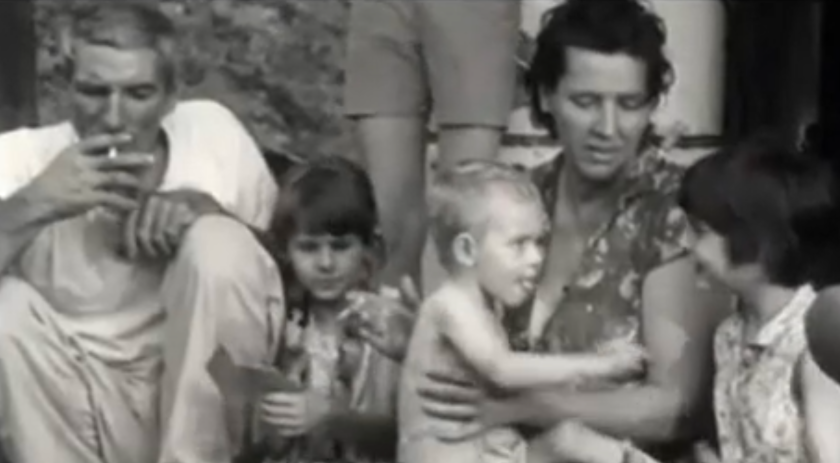
This is a particularly striking moment, as this issue is twofold. This tension applies firstly to the primary subject of her documentary, the relationship between filmmaker Hugh O’Connor and the Kentucky residents who he documented, but secondly to the relationship between Barrett herself and the issue that she is documenting. Both of these filmmakers are essentially covering the same people, the rural Kentucky residents, and thus both face the same ethical tension. However, it appears that Barrett is the only filmmaker of the two to outright acknowledge this tension.
This tension between embarrassment and action is somewhat addressed by Robert Coles in his text “Doing Documentary Work,” in which he ruminates the ethical questions that are created by documentary work. Coles specifically asks, “…what kind of moral and psychological accountability should we demand of ourselves, we who lay claim to social idealism or to a documentary tradition that will somehow (we hope) work toward a social good…?”(p. 74) These questions mirror those posed by Barrett, who asserts that it is up to the documentarian to be mindful of how documentarians portray their subjects, particularly in relation to how they portray those in poverty. A documentarian should address these questions by striving for a closer relationship with those they are portraying. By better understanding how their subjects want to be portrayed, in the case of those struggling as a result of these social issues, documentarians can take a more ethical approach in response to these tensions.
By posing these questions, Barrett is engaging in a sort of self-scrutiny regarding her own location. Is it possible that, by covering this topic, she is doomed to repeat the same mistakes made by her predecessors? Perhaps by retreading the same ground regarding the rural residents of Kentucky, she is also risking the social embarrassment she sought to address.
Leave a Reply